Photo of Bradley Doucette

Brad is an associate in the Sacramento office and part of Seyfarth’s Employment Litigation and Government Relations & Policy practice groups.

By John R. Giovannone and Hayley E. Macon

While its administrative and executive siblings often get more publicity, the “outside sales exemption” presents unique challenges for California employers, particularly those that employ large sales teams (even setting aside the administrative challenges surrounding cell phone and other business expenses).

California’s rationale for exempting outside sales personnel from overtime and similar wage-related requirements is straightforward:  “Outside sales[people] have historically been exempt ‘because ‘it’s very difficult to control their hours and working conditions. They set their own time, and they’re on the road, they call on their customers . . . . [R]arely do you know what they are doing on an hour-by-hour basis.’” DLSE Op. Ltr. (September 8, 1998).

But although the outside sales exemption reflects the difficulty of tracking hours in connection with sales activity, California still requires employers to know what hard-to-track sales employees are doing “on an hour-by-hour basis” to defend the application of that exemption.

Who is an exempt outside sales person?

Federal law:  Employees whose “primary duty” is making sales and who regularly work away from the employer’s place of business may be exempt from minimum wage and overtime pay requirements. 20 CFR § 541.500(a). This federal rule is often described as being a  “qualitative” test.

California law:  The California version of the outside sales exemption (Lab. Code § 1171) is peculiar, by federal standards. Like the federal rule, California’s exemption covers sales people who regularly work away from the employer’s place of business. But California imposes an additional “quantitative” requirement: the employee must spend most of the work day away from the employer’s place of business, engaged in sales activities. California also limits the exemption to sales people who sell tangible or intangible items, or obtain orders or contracts for products, services, or use of facilities. IWC Wage Order 1-2001(2)(j). As a result, California’s outside sales exemption is narrower than the federal exemption.

Why is the California definition problematic?
Continue Reading Get out there and sell! The Quantitative/Qualitative Outside Sales Problem


By Kristina Launey and Christie Jackson

On August 30, 2014, California Governor Jerry Brown commented on the Legislature’s passage of a bill entitled the “Healthy Workplaces, Healthy Families Act of 2014”: “Tonight, the Legislature took historic action to help hardworking Californians. This bill guarantees that millions of workers – from Eureka to San Diego – won’t lose their jobs or pay just because they get sick.”  The bill, which he signed into law September 10, will require employers statewide to provide paid sick leave.

Though the requirement that employees receive paid sick leave under the Act does not kick in until July 1, 2015, the Act already has employers sweating the law’s myriad of new provisions, mindful of the compliance headaches the new law’s vagaries are certain to bring. If only there were a vaccine… For now, as is often the case, the only sure cure is prevention. Awareness and proactive preparation is the only way to weather the worst of this latest legislative virus.

Employees May Earn 24 Hours of Paid Sick Leave Per Year: The Act grants a right to earn paid sick days to employees who—on or after July 1, 2015—work in California for 30 or more days within a year. Paid sick days will accrue at the rate of one hour for every 30 hours worked. The employee may use the accrued sick days beginning on the 90th day of employment. Exempt employees’ accrual is based on a presumed 40 hour-workweek; except that an exempt employee whose normal workweek is fewer than 40 hours will accrue paid sick days based on that employee’s normal workweek.

An employer can limit use of paid sick days to 24 hours or three days in each year of employment. No accrual or carry over is required if the full amount of leave is received at the beginning of each year. The Act does not require extra paid sick days to be paid by employers whose paid time off policies already provide as many sick days as the Act now requires.

Qualifying Reasons for Use: 
Continue Reading New Sick Pay Law Will Nauseate Some California Employers

By Daniel Kim and Michele Haydel Gehrke

Two proposed San Francisco ordinances could mean more hours and more money for San Francisco’s part-time and minimum-wage employees. San Francisco Supervisor Eric Mar’s recent proposal will give additional rights to part-time employees, including more hours, and a new ballot initiative for November proposes to raise the minimum wage rate in San Francisco.

Special protections for part-time employees?

The San Francisco Supervisors’ Land Use and Economic Development Committee is currently evaluating a city-wide ordinance that would provide additional protections for part-time employees. Eric Mar, a San Francisco Supervisor, recently proposed a new city ordinance covering the first half of what has been named the Retail Workers Bill of Rights. The proposal is sponsored through the San Francisco chapter of Jobs With Justice, an alliance of numerous coalitions relating to workers’ rights.

The proposed ordinance would:
Continue Reading Spotlight on San Francisco: New Proposals To Benefit Part-Time and Minimum-Wage Employees

By Jonathan L. Brophy

Employees are often shocked to learn that employers are not required to provide paid vacations. But it’s true. Legal guarantees of paid leave abound in other advanced economies, but not in the United States, and not even in California. Indeed, the effect of California law is to discourage employers from voluntarily providing paid vacation, because California peculiarly mandates that if the employer offers paid vacation, then the vacation pay must be deemed to vest, with any unused portion being due when employment ends. So “use it or lose it” policies, for example, are not enforceable in California.

In response to this annoying California peculiarity, some employers have considered adopting “no vacation” policies, and “unlimited time off” policies for exempt employees. Below is a quick primer on such policies and some issues to consider before changing existing policies.
Continue Reading Vacation: No Pay for My Time Off? Exploring the Nuances of Unlimited or No Paid Time Policies

By Michele Haydel Gehrke

In a decision significant for employers with Bring Your Own Device (“BYOD”) policies, a California Court of Appeal held in Cochran v. Schwan’s Home Service that employees who must use personal cell phones for work are entitled to reimbursement for “some reasonable percentage” of the personal cell phone bill, irrespective of whether they have incurred additional
Continue Reading Hold The Line: Employers On The Hook For “Reasonable Percentage” Of Personal Cell Phone Expenses If Employee Uses Phone For Work

By Michael Kopp and Sarah Hamilton

In a simpler world, only the time an employee spent working would count as “hours worked.”  In the world we live in, the employer may need to keep the pay clock running to track time that might be regarded as off duty, such as time spent sleeping, traveling, on call, or at rest. With a rising number of lawsuits now seeking to recover pay for idle time, let’s review some main issues.

The big picture: it is employer control, not employee productivity, that matters. California’s Wage Orders uniformly define “hours worked” as “the time during which an employee is subject to the control of an employer, and includes all time the employee is suffered or permitted to work, whether or not required to do so.” So the key question often is not whether the employee is actually working during the time in question, but whether the employee merely is subject to the employer’s control.

When do I need to pay employees for not (really) working?

  • When can sleeping on the job be “hours worked”? In California, the final answer remains to be seen. Federal law allows employers and employees to agree to exclude up to 8 hours of a 24-hour shift as unpaid sleep time, as long as: (1) the employer provides adequate sleeping facilities, (2) the employee has at least 5 hours of uninterrupted sleep, (3) the employee agrees to the sleep deduction, and (4) sleep-time deductions are only permitted from a 24-hour shift.  California courts traditionally followed the federal approach. See Monzon v. Schaefer Ambulance Serv., Inc., 224 Cal. App. 3d 16 (1990). But stay tuned—whether California will continue to permit such agreements, and on what terms, is the central issue pending before the California Supreme Court in Mendiola v. CPS Security Solutions, Inc. We will keep you updated here at CalPecs with new developments!
  • Are rest and recovery breaks “hours worked”?  California’s Wage Orders provide that the 10-minute rest breaks mandated for every 4 hours of work (or major portion thereof) are counted as  “hours worked.” That means they must be paid for and counted in determining whether the employee worked overtime.

But did you know there are other potentially paid breaks?  Required lactation breaks can be compensable time, to the extent those breaks coincide with the standard 10-minute rest periods mandated by the Wage Orders. (But lactation breaks taken outside of or in excess of the standard 10-minute rest periods are, to that extent, not compensable time.)  Also, for employers with outdoor places of employment, mandated “cool down” recovery time, for the purpose of heat illness prevention, is compensable time. See our previous article here for more details.

  • The daily commute: is heading to work also work?  Generally, the daily work commute (home-to-work and work-to-home) is not compensable as “hours worked” under either federal and California law. But if the employee performs work during the commute, such as reviewing reports while on the train, that time may be compensable.

Are there any other potential commuting pitfalls for the unwary employer?  Yes. California courts have held that employer-provided shuttles to work can convert this daily commuting time into “hours worked,” where the employer requires employees to use the employer-provided transportation. Morillion v. Royal Packing Co., 22 Cal. 4th 575 (2000). In contrast, commuting on truly optional employer-provided work shuttles need not be compensated. Overton v. Walt Disney Co., 136 Cal. App. 4th 263 (2006).

By Joshua Seidman

Last week, San Diego became the latest jurisdiction to catch the paid sick leave and minimum wage bug that has been spreading throughout the country in 2014.  Specifically, on Monday, July 28, 2014, the San Diego City Council gave final approval to the City of San Diego Earned Sick Leave and Minimum Wage Ordinance (the “Ordinance”). While
Continue Reading Minimum Wage Hike and Paid Sick Time Coming to San Diego

By Mark Grajski and Maya Harel

In theory, the California Labor Code and the Wage Orders allow employers the freedom to do what employers traditionally have done: pay employees solely with commissions or solely with piece rates. This idea of incentive pay—you reap what you sow— has been around a long time!

But a wave of California judicial court decisions has eroded the once-solid foundations of traditional incentive pay systems. In response, employers have been moving towards complicated hybrid compensation systems.

So what do you need to know when deciding to use one of these incentive or hybrid compensation systems?

Beware: Averaging Earnings Over the Pay Period Is Not Allowed to Satisfy Minimum Wage

Federal law allows employers to average wages over a pay period to meet minimum wage requirements (dividing total compensation by total number of hours worked). California does not. Courts have read California’s minimum wage statute to require employers to pay the minimum wage separately for each hour worked.

The tension between this requirement and traditional commission and piece-rate pay systems became apparent in 2005 in the California Court of Appeal decision in Armenta v. Osmose. In Armenta, employees earned their pay solely through piece rates. The Armenta court held that while the piece rate compensated employees for their “productive time”—time spent actually working on piece-rate tasks—the piece rate did not compensate them for their “non-productive time”—time spent doing anything else.

  • What Kinds of Pay Systems Have Employers Used In Response, and Do They Pass Legal Muster?

In an attempt to comply with Armenta, many employers created complicated hybrid hourly and incentive compensation systems. Unfortunately, even these laudable efforts to comply with California law may still expose well-intentioned employers to liability.

For example, in Bluford v. Safeway, the employer paid its truck drivers a certain figure to each mile driven, a piece rate for certain non-driving tasks, an hourly rate for other tasks, and a different hourly rate for unexpected driving delays. Even so, an unsympathetic Court of Appeal held that Safeway’s system violated the Wage Order because the system did not provide separately for an hourly rate for rest breaks, which the Wage Order designates as “hours worked.”

By Nicholas Clements and Kerry Friedrichs

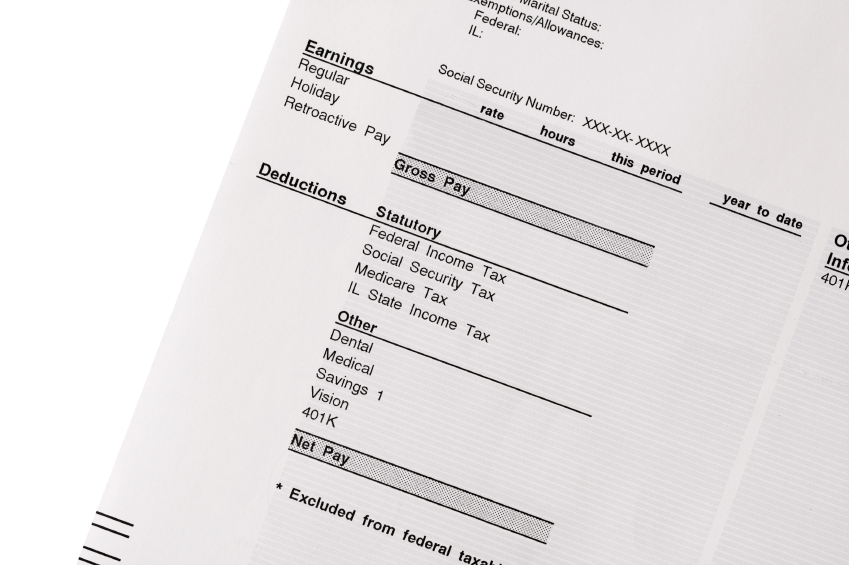
Well-intended employers often lament the various gotchas that await them down the dark and winding road that is the California Labor Code. Perhaps no turn in the road is more treacherous than the one at Wage Statement Junction. Here one crosses at extreme peril, for the California Legislature, in Labor Code section 226, has planted legal land mines that can blow up at the slightest provocation.

A Common Sense Question With a Less-Than-Intuitive Answer:  “Can’t I avoid hazards if I just pay them the right amounts and on time?” Sadly, no, there’s much more to it. Labor Code section 226(a) lays out a long list of other requirements, some more sensible than others.

Not so Simple. Timely paychecks must be accompanied by a “simple” wage statement at least semi-monthly, and the wage statement must include nine distinct pieces of information for each employee:
Continue Reading Time to Revisit Your Pay Stubs?

The American Bar Association is holding its annual competition for the 100 best legal blogs and Seyfarth’s California Peculiarities Employment Law blog is in the running.

Whether you are an avid reader of our timely legal and news updates, look forward to our popular Cal-Peculiarities publication, enjoy our complimentary webinars, or simply utilize our legal resources page, we would greatly
Continue Reading We Need Your Votes! – California Peculiarities Employment Law in the Running for Top 100 Legal Blogs